
CAVE + VIEWPOINT · THAKHEK LOOP
Dragon Cave
Tham Mangkone Mangkone Cave Dragon Cave
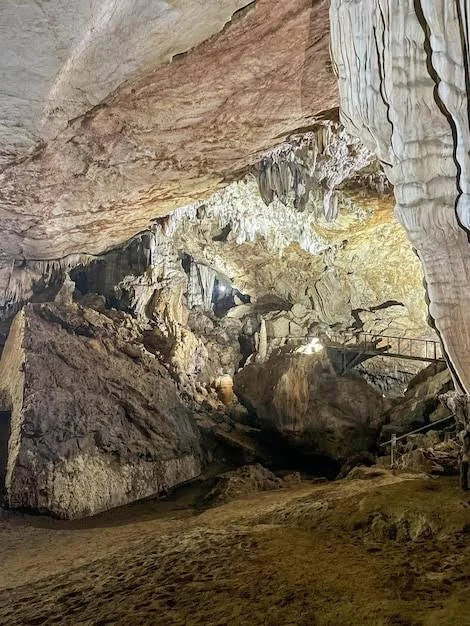
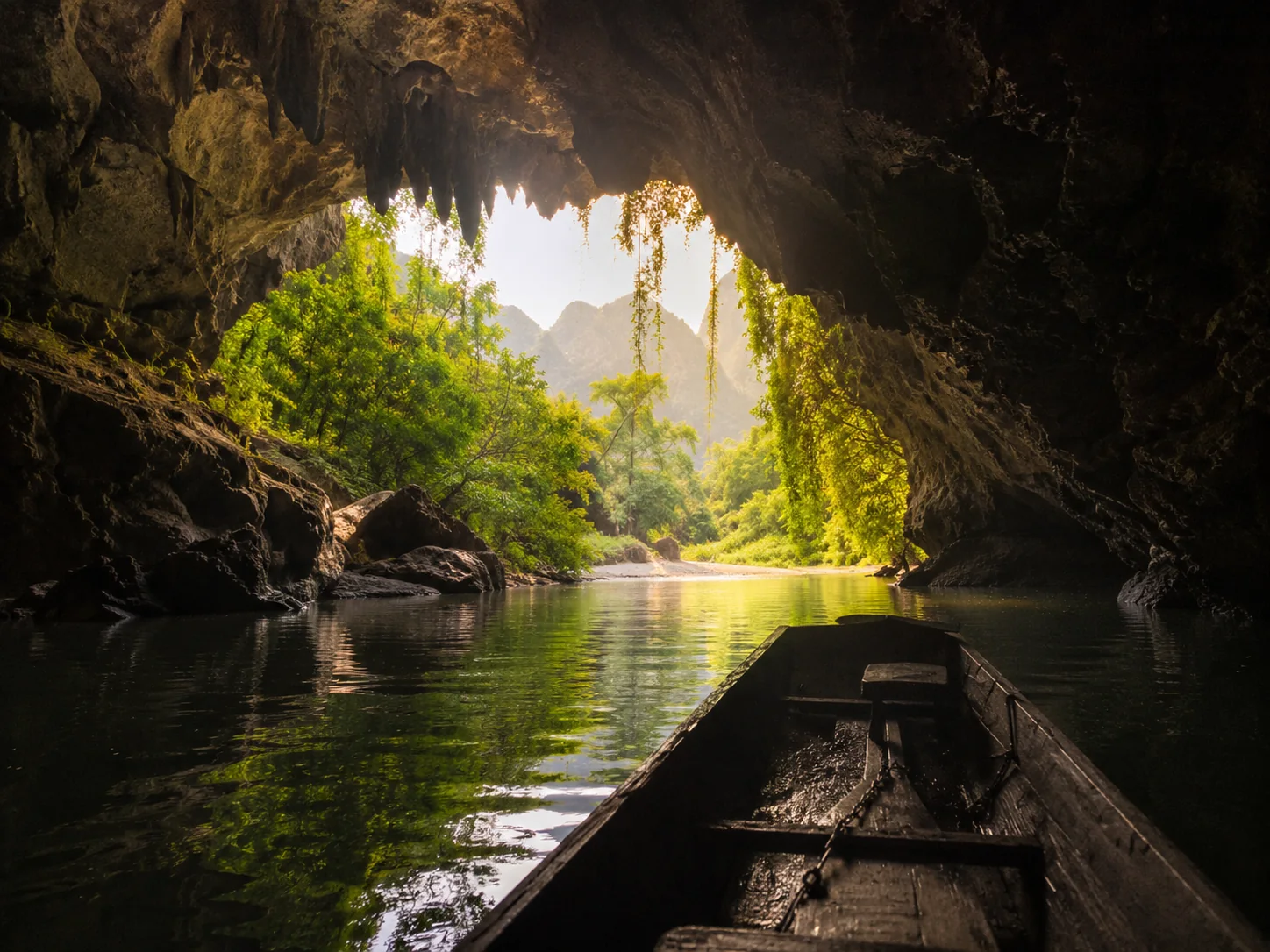
Dragon Cave is the Day 2 cave near Lak Sao where a low passage beside the underground water opens into a much larger limestone chamber, then a stair-and-rock route climbs toward a viewpoint above the karst.
- 01 Stop from Route 8 near Lak Sao
- 02 Crouch through the low entrance passage
- 03 Explore the larger chamber and formations
- 04 Climb toward the viewpoint if conditions are good
Allow one to two hours for the cave and viewpoint together. The climb is part of what makes the stop worthwhile, but Day 2 still has a long road ahead, so leave enough daylight for the ride onward.
FIELD NOTES
THE QUICK READ
Dragon Cave / Laos
TIME
1–2 HOURS
Cave walk + optional viewpoint climb
ROUTE
ROUTE 8 · NEAR LAK SAO
Easy roadside stop on the classic Day 2 stage
BUDGET
≈50K KIP
Current 2026 traveller references · confirm at the gate
BEST FOR
CAVE + KARST VIEWPOINT
Low passage · large chamber · limestone panorama
THE CONTRAST
The cave gets bigger after making you crouch
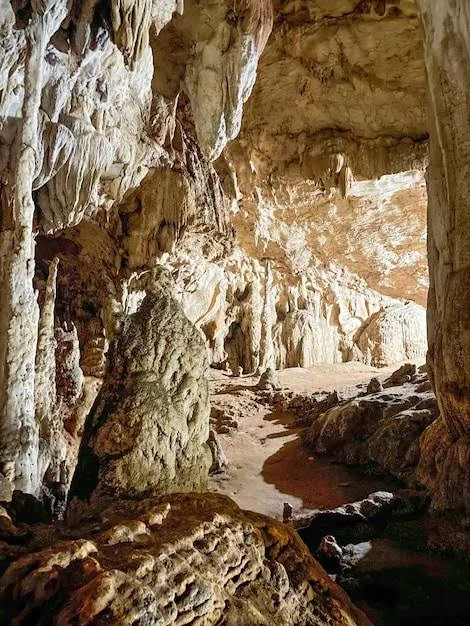
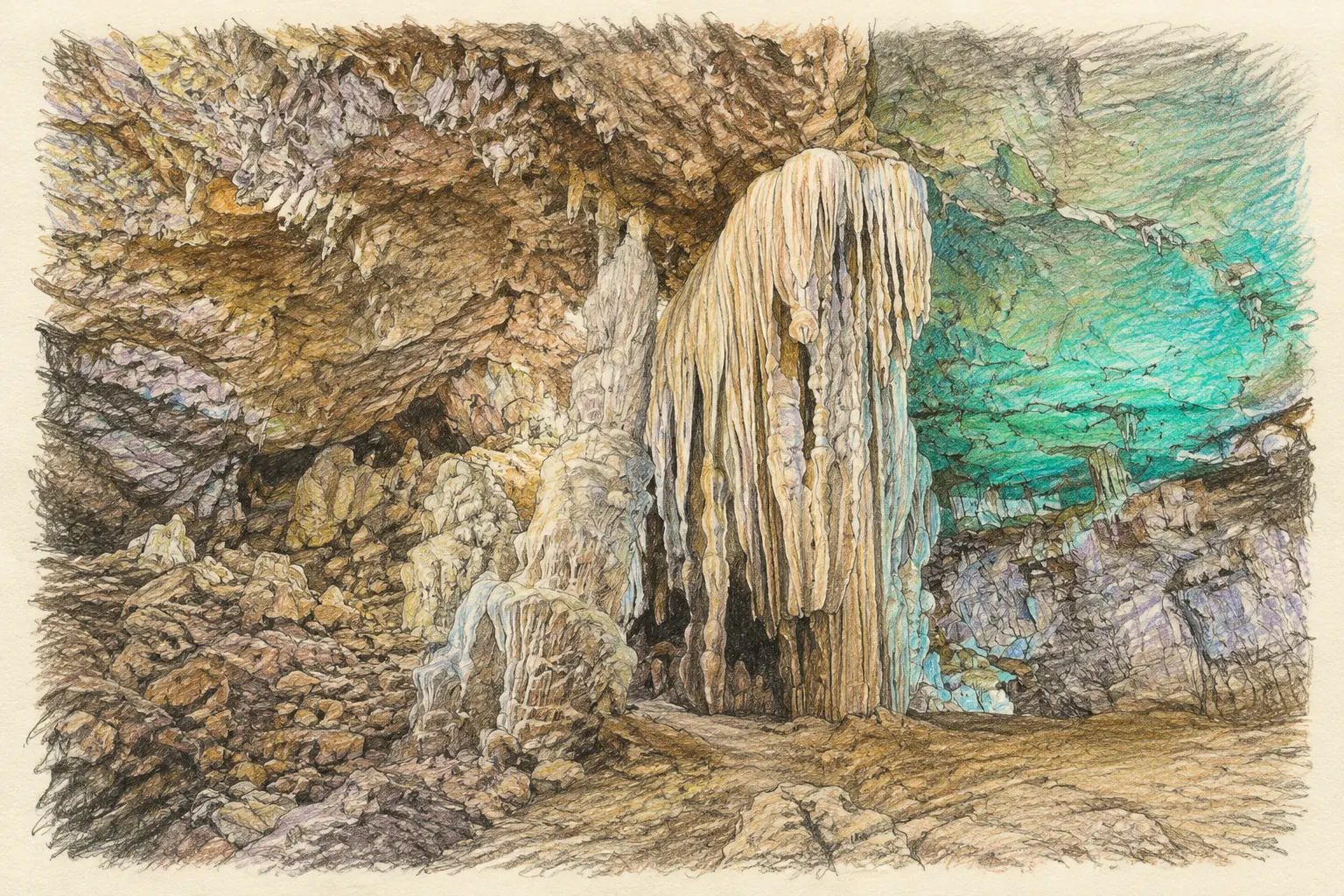
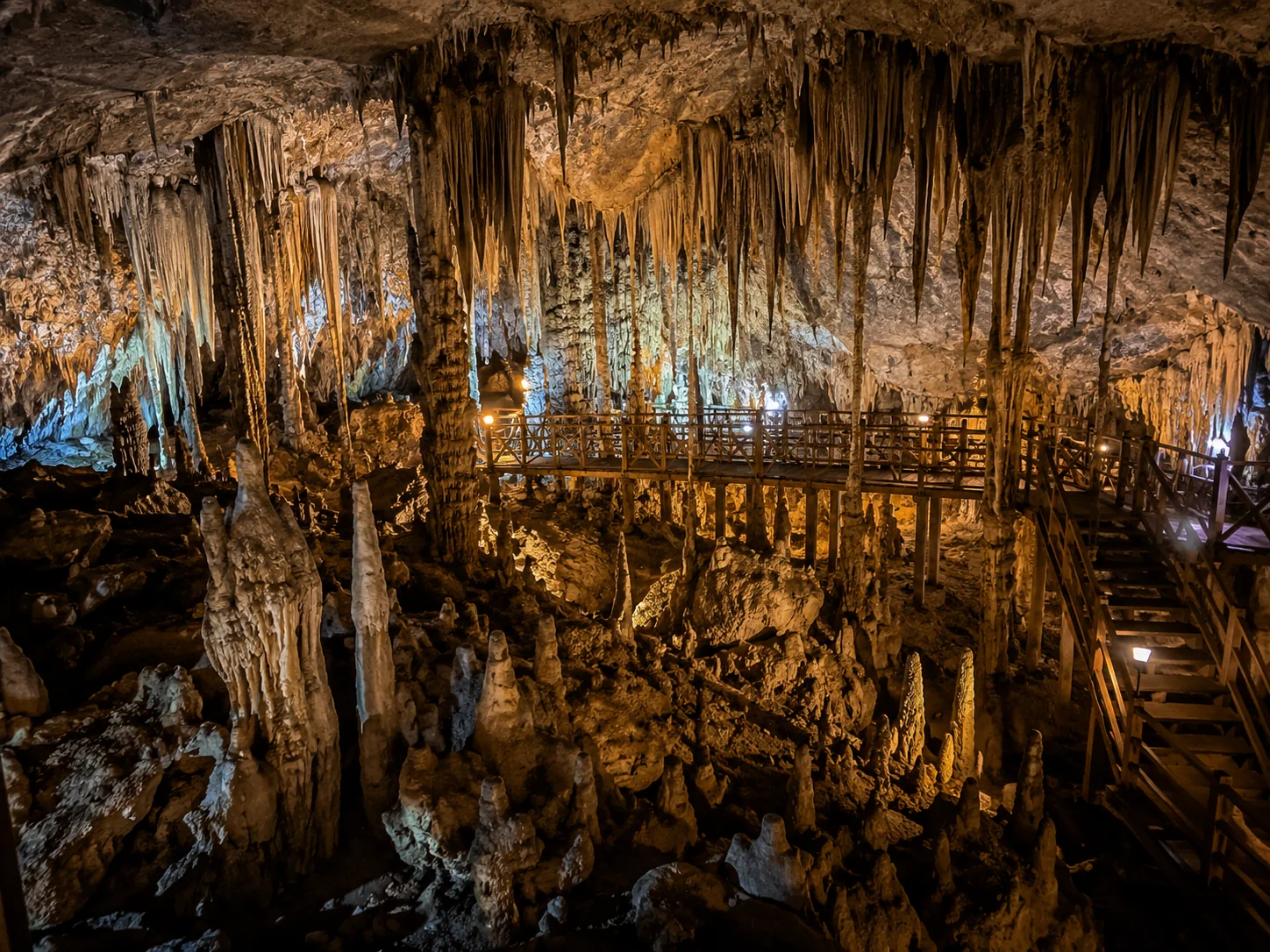
Dragon Cave works because it changes scale quickly. The visitor route starts through a low section where you may need to bend down and watch your footing around sand, rock and water. Then the ceiling releases and the cave opens into a much larger chamber filled with stalactites and stalagmites, with lighting picking out the formations. It is not the longest cave visit on the Loop, but the transition from compressed passage to open cavern gives it a stronger sense of discovery than its roadside access suggests.
THE VIEWPOINT
Do not stop when the underground section seems finished
Recent local and traveller guides consistently describe a second chapter beyond the main chamber: stairs, rocks and a steeper climb lead out toward a viewpoint over the surrounding limestone, rice fields and road. That upper view is what turns Dragon Cave from another short cave stop into a more complete Day 2 experience. Take the climb slowly, use the built route that is open on the day and skip exposed or slippery sections when rain has made the ground questionable.
THE SHRINE
The stop begins before the low passage
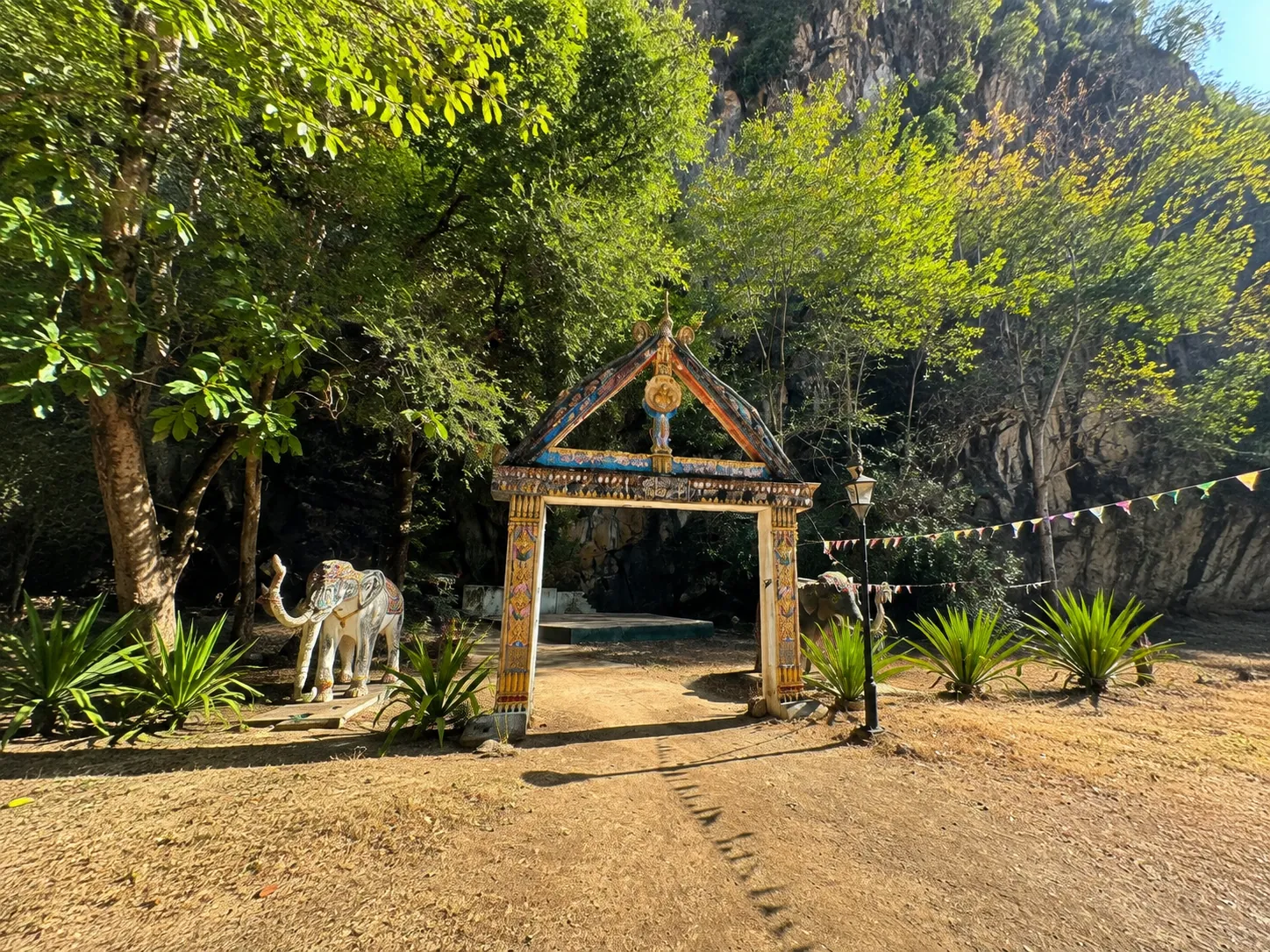
Recent first-hand guides describe a small temple shrine in the forested grounds beside the cave entrance. Give it the same quiet respect you would any Buddhist space: keep voices down around worshippers, do not use religious objects as photo props and let the shrine remain part of the place rather than background decoration. The cave is the main attraction, but the religious setting adds a local layer that is easy to miss if you rush straight underground.
THE CONDITIONS
Developed does not mean weather-proof
Dragon Cave has visitor lighting, stairs and a defined route, but it still contains low ceilings, damp ground, sand, rock and water. Recent guides also warn that wet-season flooding can affect access or close the cave. After strong rain, ask at the entrance what is open before committing to the full route or viewpoint, and let the current site conditions overrule an old online description.
FIELD NOTE · BEFORE YOU LEAVE
Bring grip, light and enough daylight
Wear shoes with grip and clothes that can cope with damp cave surfaces. A phone light can help, but a small headlamp is more useful through darker or low sections. Carry cash for the entrance and water for the climb. Most importantly, do not turn the viewpoint into a race against the afternoon: if the route is wet, closed or uncomfortable, the main chamber is still a complete cave visit.
QUESTIONS BEFORE GOING
Dragon Cave,without the guesswork
Five things worth clearing up before you go.
Where is Dragon Cave on the Thakhek Loop?
Dragon Cave, also called Tham Mangkone, sits on Route 8 near Lak Sao and is included on the classic Day 2 stage between Thalang and Khoun Kham.
How much does Dragon Cave cost?
Recent 2026 and other current traveller references consistently place the entrance around 50,000 kip per person. The provincial tourism page does not publish a current ticket price, so confirm the posted fee at the entrance.
How long do you need at Dragon Cave?
Allow about one to two hours for the cave and viewpoint together. The underground section can be visited more quickly, but the climb above the cave is an important part of the stop.
Is there a viewpoint at Dragon Cave?
Yes. Current local and traveller guides describe stairs and a rocky climb from the cave route to a viewpoint over the surrounding karst, fields and road. Skip the upper section when wet or locally closed.
What should you wear for Dragon Cave?
Wear shoes with grip and clothes that can handle damp cave surfaces. A small headlamp is useful for darker and low sections, and carry water if you plan to climb to the viewpoint.
PLAN YOUR VISIT
Dragon Cave,at a glance
The practical details worth keeping close before you go.
Loop position
Day 2 · Route 8 near Lak Sao
Khammouane Tourism includes Dragon Cave on the classic Thalang–Khoun Kham stage, and a current Thakhek operator places it on Route 8 near Lak Sao. It is a roadside Loop stop rather than a major detour.
Time needed
About 1–2 hours
Allow enough time for the low entrance section, main chamber and the viewpoint route. The cave alone can be shorter; the climb is what makes a fuller visit.
Entrance
About 50,000 KIP · confirm locally
A June 2026 first-hand Loop guide and several recent independent reports converge on 50,000 kip per person. The provincial tourism page does not currently publish a ticket price, so treat 50,000 kip as a planning reference and confirm the posted fee on arrival.
Opening hours
Recent guide reference: 08:00–17:00
A recent Loop guide lists daily opening from 08:00 to 17:00. Because the official provincial page does not publish hours, avoid arriving close to closing and follow the current entrance sign or staff instructions.
Inside
Low ceiling · damp ground · lit chamber
Expect to bend through part of the route before the cave opens into the larger chamber. Wear shoes with grip and carry a small light even though parts of the visitor route are illuminated.
Viewpoint
Steeper climb after the cave
Stairs and rocky sections continue toward the upper viewpoint. Take your time, keep both hands free where needed and skip the climb if rain has made the route slippery or staff advise against it.
KEEP IT IN YOUR ATLAS
Save Dragon Cave for the road.
Keep this field note close. Add it to My Atlas now, or open the map when you are ready to work out the route.

Keep exploring Thakhek.


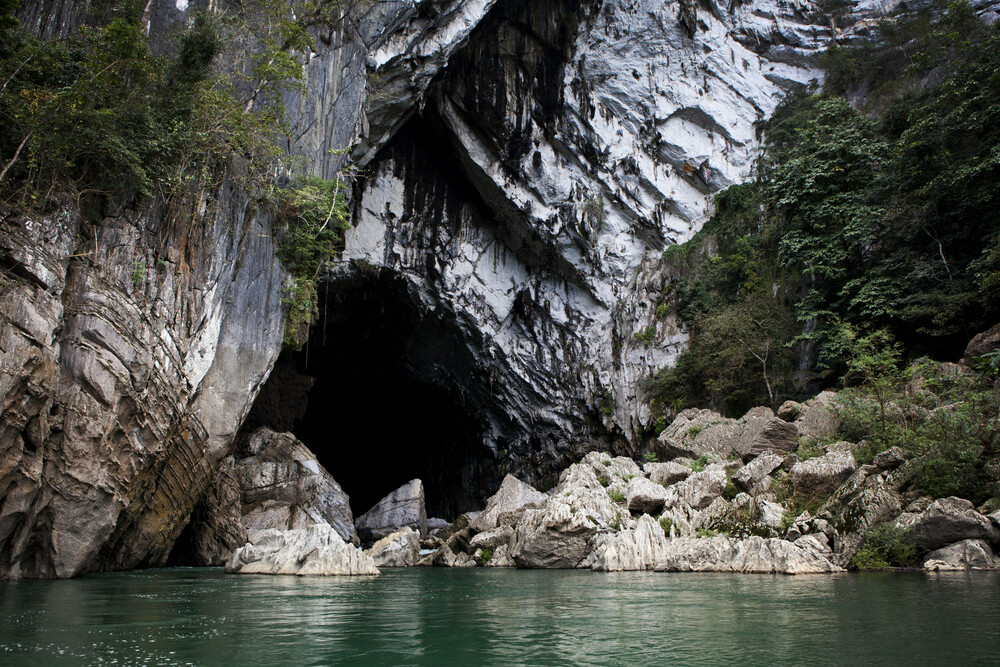




Field note method. Wikipedia is used as a research starting point for history and geography when a relevant article exists. Facts are checked against official, local or specialist sources where possible. Independent travel blogs and field reports are used to identify practical questions, recurring observations and traveller perspective; their wording is not copied.
Sources & photo licences
Research sources
Photo licences
- User-supplied photo · User-supplied
- User-supplied photo · User-supplied
- User-supplied drawing · User-supplied
- Phó Nháy · Public domain ↗
- Busy · CC BY-SA 3.0 ↗
- GIZ ProFEB / Lucas Wahl · Attribution · NoDerivatives ↗
- User-supplied photo · User-supplied
- User-supplied photo · User-supplied
- User-supplied photo · User-supplied
- Aleksey Gnilenkov · CC BY 2.0 ↗
- Aleksey Gnilenkov · CC BY 2.0 ↗
- chalongrat hantragul · CC BY 3.0 ↗
- Adriaan Castermans · See Wikimedia Commons file page ↗
- Aleksey Gnilenkov · CC BY 2.0 ↗
- User-supplied photo · User-supplied
- User-supplied photo · User-supplied
- BacLuong · CC BY-SA 4.0 ↗
- Tango7174 · CC BY-SA 4.0 ↗
- GIZ ProFEB · Nomination File · Attribution · NoDerivatives ↗