
COLD SPRING · THAKHEK LOOP
Cool Springs
Cool Springs Cool Pool Cool Pond Vang Nam Yen
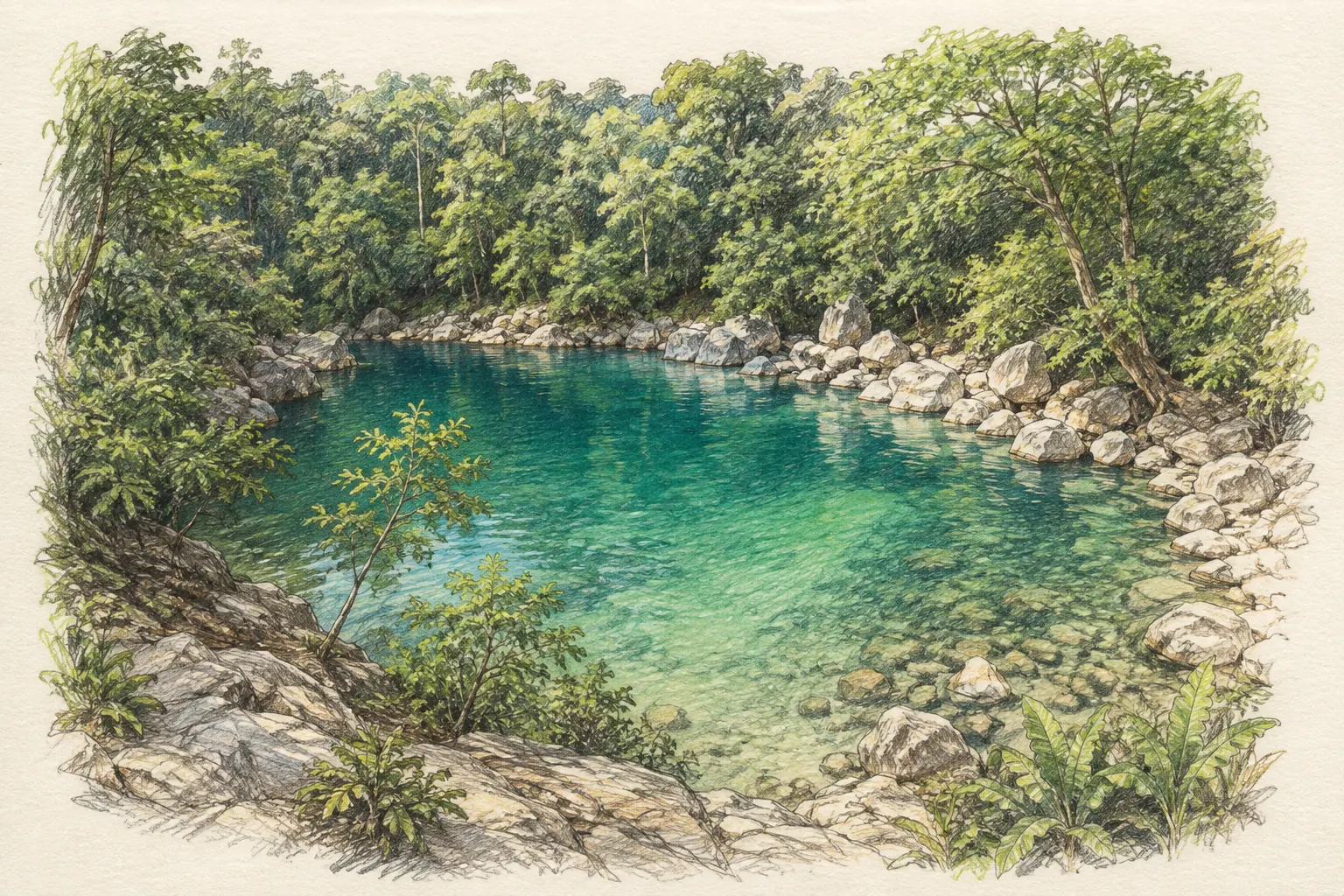
Cool Springs is the Day 2 reset on the Thakhek Loop: a clear turquoise spring near Ban Napavan, tucked below limestone and forest after the long ride out of Thalang.
- 01 Ride west from Thalang toward the karst corridor
- 02 Turn off Route 8 near Ban Napavan
- 03 Follow the side track across the open fields
- 04 Swim, cool down and leave before the road day gets late
This stop works because it interrupts the ride. Give the cold water an hour, then get back on the road while there is still comfortable daylight for Dragon Cave and Khoun Kham.

FIELD NOTES
THE QUICK READ
Cool Springs / Laos
TIME
1–2 HOURS
easy swim-and-rest stop on Day 2
ROUTE
BAN NAPAVAN
short side track from Route 8 on the Thalang–Khoun Kham stage
BUDGET
CHECK CURRENT FEE
older published prices vary · carry small cash
BEST FOR
COLD KARST SWIM
turquoise spring · forest shade · road-day reset
THE RESET
Day 2 needs a stop that is not another cave
The official Thakhek Loop places Cool Springs on the 145-kilometre second stage between Thalang and Khoun Kham. After the reservoir, forest roads and long bends of the morning, the spring changes the rhythm completely: turn away from the main road, cross the flatter country around Ban Napavan and arrive at cold turquoise water under limestone and trees. The attraction is deliberately simple. You are not here to complete a route through chambers or viewpoints; you are here to stop riding, cool down and give the body a break before the road continues toward Dragon Cave and Khoun Kham.
THE WATER
The colour comes with a real temperature shock
Current Khammouane Tourism describes the spring as crystal-clear blue and specifically recommends it for a refreshing dip. Independent local and traveller accounts consistently describe the water as unusually cold, clear and spring-fed at the foot of limestone. That is what makes the stop memorable after several hours on a motorbike. Enter gradually rather than jumping straight in, especially when you are overheated from the road, and let the water do what the stop is designed for: reset the day rather than turn it into another endurance challenge.
QUESTIONS BEFORE GOING
Cool Springs,without the guesswork
Five things worth clearing up before you go.
Where are Cool Springs on the Thakhek Loop?
Cool Springs are near Ban Napavan on Day 2 of the classic Loop, between Thalang and Khoun Kham. The official Thai Khammouane Tourism route identifies Ban Napavan, while older field guides place the turn from Route 8 around the Ban Phontan / Ban Napavan area.
Can you swim at Cool Springs?
Yes. Khammouane Tourism currently promotes the stop specifically for a refreshing swim in clear blue water. It is still a natural spring rather than a controlled pool, so enter gradually, check the depth before jumping and follow any local signs or instructions.
How long should you spend at Cool Springs?
About one to two hours is enough for the side-road approach, a swim and a proper rest. The stop sits inside a 145 km riding day, so leave enough daylight for Dragon Cave and the final road into Khoun Kham.
How much does Cool Springs cost?
There is no reliable current fee published by the official tourism source. Older online references commonly quote around 10,000 to 20,000 kip, but those figures are stale. Carry small cash and confirm the current posted or locally quoted rate on arrival.
Is the road to Cool Springs difficult?
The final approach uses a local unpaved side track across the Ban Napavan area. In dry conditions it is normally a straightforward short detour, while rain can make it muddy or rutted. Follow current signs, slow down and do not force the track if conditions have deteriorated.
PLAN YOUR VISIT
Cool Springs,at a glance
The practical details worth keeping close before you go.
Loop position
Day 2 · Thalang → Khoun Kham
Khammouane Tourism places Cool Springs on the classic 145 km second stage, before Dragon Cave and the final run to Khoun Kham. The official riding estimate is 4–6 hours before stops.
Location
Ban Napavan · off Route 8
The current official Thai Loop guide identifies Cool Springs at Ban Napavan. Older route guides place the turn east of Ban Phontan / near Ban Napavan, followed by a local side track toward the limestone.
Time needed
1–2 hours
Allow enough time for the approach, a swim and a proper rest. Keep the stop shorter if you still want Dragon Cave and a daylight arrival in Khoun Kham.
Entrance
Confirm the current fee
Published price references are old and inconsistent, commonly 10,000–20,000 kip. Carry small cash and use the current posted or locally quoted rate rather than relying on an old online number.
Swimming
Cold spring water · enter gradually
Khammouane Tourism currently promotes Cool Springs for swimming. Treat it as natural water rather than a controlled pool: enter gradually, check depth before jumping and follow any current local rules.
After rain
Check the side track before committing
The final unpaved approach can become muddy after rain. Slow down, follow current signs and local advice, and do not force the track if conditions have deteriorated.
KEEP IT IN YOUR ATLAS
Save Cool Springs for the road.
Keep this field note close. Add it to My Atlas now, or open the map when you are ready to work out the route.

Keep exploring Thakhek.






Field note method. Wikipedia is used as a research starting point for history and geography when a relevant article exists. Facts are checked against official, local or specialist sources where possible. Independent travel blogs and field reports are used to identify practical questions, recurring observations and traveller perspective; their wording is not copied.
Sources & photo licences
Research sources
Photo licences
- Aleksey Gnilenkov · CC BY 2.0 ↗
- User-supplied drawing · User-supplied
- Phó Nháy · Public domain ↗
- Busy · CC BY-SA 3.0 ↗
- GIZ ProFEB / Lucas Wahl · Attribution · NoDerivatives ↗
- User-supplied photo · User-supplied
- User-supplied photo · User-supplied
- User-supplied photo · User-supplied
- Aleksey Gnilenkov · CC BY 2.0 ↗
- Aleksey Gnilenkov · CC BY 2.0 ↗
- chalongrat hantragul · CC BY 3.0 ↗
- Adriaan Castermans · See Wikimedia Commons file page ↗
- User-supplied photo · User-supplied
- User-supplied photo · User-supplied
- User-supplied photo · User-supplied
- BacLuong · CC BY-SA 4.0 ↗
- Tango7174 · CC BY-SA 4.0 ↗
- GIZ ProFEB · Nomination File · Attribution · NoDerivatives ↗