
CRAFT WORKSHOP · TAD LO
Katu Weaving Workshop
Katu weaving Katu backstrap weaving Beaded textile workshop
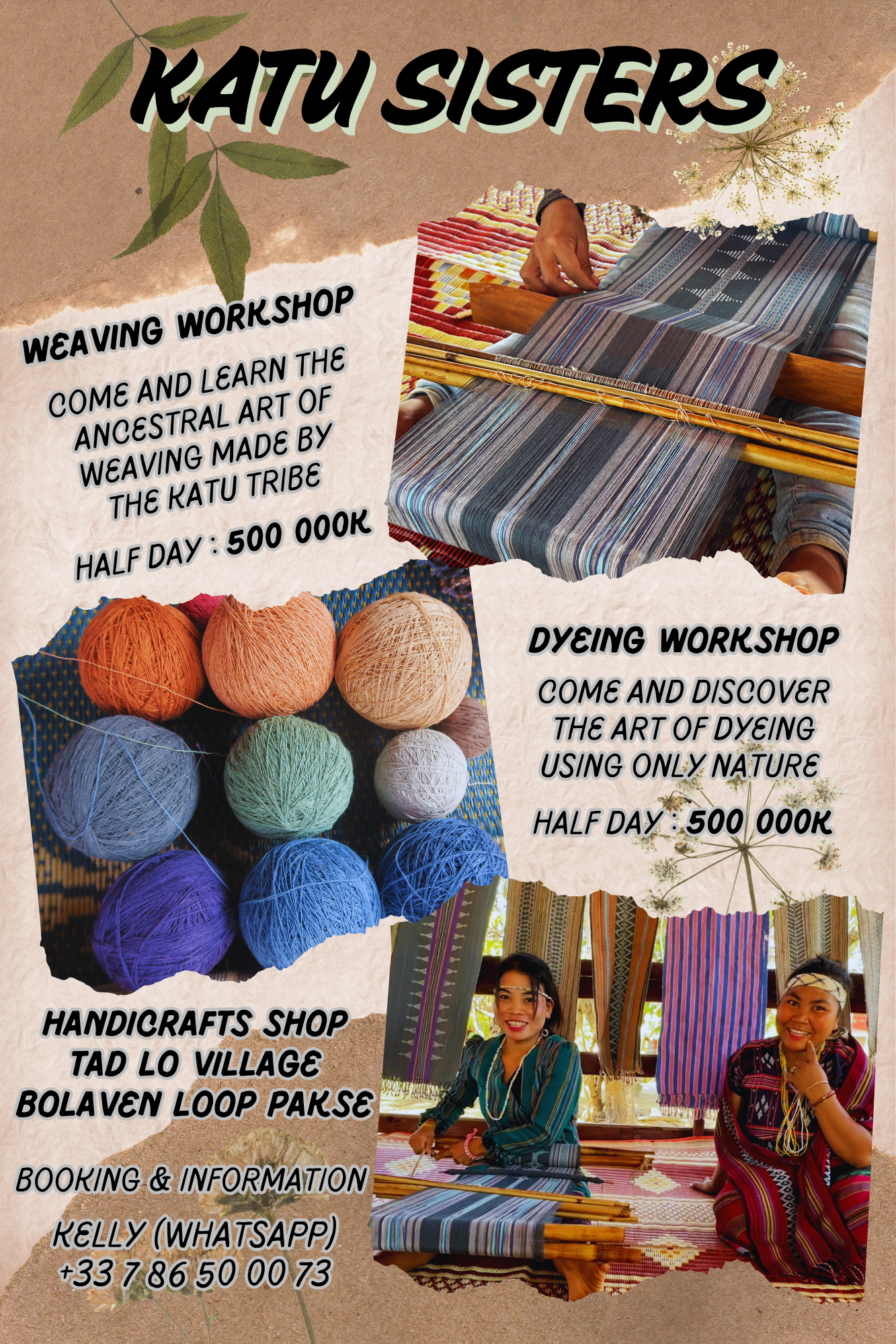
Spend about four hours with a local weaver learning how Katu textiles are built on a foot-braced backstrap loom, where body tension, thread control and bead placement turn a simple setup into dense patterned cloth.
- 01 Meet the host and read the loom
- 02 Understand posture and body tension
- 03 Try the weaving rhythm
- 04 Look closely at bead placement
This is not a souvenir stop. Book ahead, expect to sit and concentrate, and let the host set the pace for how much you observe or try.
FIELD NOTES
THE QUICK READ
Katu Weaving Workshop / Laos
TIME
ABOUT 4 HOURS
half-day hands-on workshop
ROUTE
WALKABLE
confirm the exact host and meeting point when booking
BUDGET
PAID · CONFIRM PRICE
current Visit Tad Lo page does not publish a fixed rate
BEST FOR
HANDS-ON CRAFT
backstrap loom · beaded textiles · patient technique
THE LOOM
Your body is part of the machine
Katu women traditionally weave on a foot-braced backstrap loom, a deceptively simple setup in which the weaver’s seated posture and body tension help control the warp. TAEC describes it as an ancient cloth-making technique, and the current Tad Lo workshop is built around learning that posture, rhythm and control rather than merely watching a finished textile. Expect the first lesson to be physical as much as visual: how the loom sits around the body, how tension changes when you move, and why a few centimetres of even weaving can require more concentration than the apparatus suggests.
THE DETAIL
The beads are woven into the cloth
One of the most distinctive Katu textile techniques is the integration of beads during weaving rather than simply sewing decoration onto finished cloth. Craft documentation for southern Laos describes beads being threaded onto the weft and positioned between warp threads to build motifs as the cloth grows. That turns pattern-making into a slow sequence of counting, placement and repeated tension. The workshop makes more sense when you watch those small decisions rather than judging success by how much fabric you manage to produce yourself.


THE TECHNIQUE
Why Katu cloth feels different from a frame loom
A foot-braced backstrap loom has no heavy freestanding frame. The weaver’s body provides part of the structure: legs brace the warp, the backstrap and seated posture maintain tension, and small movements change how evenly the threads sit. That makes learning physical in a way photographs do not show. Even if you only weave a short section, the useful lesson is understanding why posture, tension and repetition matter as much as the visible pattern.
THE CONTEXT
A Salavan craft, not a staged museum demo
TAEC works with Katu women’s cooperatives in Salavan and Sekong and documents the same backstrap-and-bead textile tradition across southern Laos. Materials and colours are not frozen in time: craft references note the use of cotton, beads, natural dyes and, depending on maker and market, modern fibres or colourants as well. Do not judge a host’s work against an imagined museum version of authenticity. The living technique matters more than whether every thread matches an old photograph.
FIELD NOTE · BEFORE YOU LEAVE
Keep the host in control of the encounter
Book ahead, confirm the exact meeting point and current price, and ask what the workshop includes. Once there, let the host decide which steps you try and how close you sit to the working loom. Photography deserves the same consent as any other part of the encounter: ask before taking portraits or detailed images of someone at work, and accept a no without turning it into a negotiation. The workshop is strongest when the host remains a craftsperson sharing knowledge, not a subject arranged for a visitor’s camera.
QUESTIONS BEFORE GOING
Katu Weaving Workshop,without the guesswork
Five things worth clearing up before you go.
Do I need to book the Katu Weaving Workshop in Tad Lo?
Yes. Visit Tad Lo currently marks the workshop as booking required. Confirm the host, exact meeting point, current price, contact and what is included before building the rest of your day around it.
How much does the Katu Weaving Workshop cost?
The current Visit Tad Lo page does not publish a fixed price. Treat it as a paid, by-arrangement activity and confirm the current rate directly when booking rather than relying on an old online figure.
How long does the Katu Weaving Workshop take?
Allow about four hours, or a half day. The current local description is built around learning posture and technique rather than a quick demonstration, so leave enough time to work at the host’s pace.
What kind of loom is used in Katu weaving?
Katu women traditionally use a foot-braced backstrap loom. The weaver sits and uses body position, the backstrap and the legs to help control warp tension, which makes posture part of the weaving technique.
What makes Katu textiles distinctive?
Many Katu textiles integrate beads directly during weaving, with beads threaded onto the weft and positioned between warp threads to create motifs. Materials, colours and designs can vary between makers, so do not expect every piece to match one fixed museum style.
PLAN YOUR VISIT
Katu Weaving Workshop,at a glance
The practical details worth keeping close before you go.
Booking
Required · confirm the host before going
Visit Tad Lo currently marks the workshop as booking required. Confirm the host, exact meeting point, contact, current price, what is included and the host’s photo preferences when you arrange it.
Time needed
About 4 hours · half day
The current local description gives roughly four hours for learning posture, weaving technique and the time behind handmade textiles. Leave the half day clear rather than squeezing it between waterfall stops.
Access
Walkable from Tad Lo
No private transport is normally needed. The catalogue lists the workshop as walkable, but the exact meeting point depends on the host arrangement, so get that detail when booking.
Physical comfort
Seated posture can be demanding
A foot-braced backstrap loom uses the weaver’s body to hold tension. Visit Tad Lo warns that the sitting posture and flexibility required may be uncomfortable; mention mobility or back issues before booking so the host can advise what is realistic.
Availability
Seasonal · lower availability possible in low season
The workshop is not a guaranteed walk-in attraction. Availability depends on the host and season, which is another reason to arrange it before building the rest of the day around it.
Etiquette
Ask before photographing people
Treat the session as time with a host, not as a staged photo opportunity. Ask before close portraits, let the host decide which steps guests try and do not assume a finished textile or souvenir is included unless that has been confirmed.
KEEP IT IN YOUR ATLAS
Save Katu Weaving Workshop for the road.
Keep this field note close. Add it to My Atlas now, or open the map when you are ready to work out the route.

Keep exploring Tad Lo.





Field note method. Wikipedia is used as a research starting point for history and geography when a relevant article exists. Facts are checked against official, local or specialist sources where possible. Independent travel blogs and field reports are used to identify practical questions, recurring observations and traveller perspective; their wording is not copied.
Sources & photo licences
Research sources
Photo licences
- Visit Tad Lo partner media · Used with owner permission; attribution and link to Visit Tad Lo required ↗
- Pierre André Leclercq · CC BY-SA 4.0 ↗
- Pierre André Leclercq · CC BY-SA 4.0 ↗
- Basile Morin · CC BY-SA 4.0 ↗
- User-supplied photo · User-supplied
- Visit Tad Lo partner media · Used with owner permission; attribution and link to Visit Tad Lo required ↗
- Visit Tad Lo partner media · Used with owner permission; attribution and link to Visit Tad Lo required ↗
- Visit Tad Lo partner media · Used with owner permission; attribution and link to Visit Tad Lo required ↗
- Visit Tad Lo partner media · Used with owner permission; attribution and link to Visit Tad Lo required ↗
- Visit Tad Lo partner media · Used with owner permission; attribution and link to Visit Tad Lo required ↗
- Visit Tad Lo partner media · Used with owner permission; attribution and link to Visit Tad Lo required ↗
- Visit Tad Lo partner media · Used with owner permission; attribution and link to Visit Tad Lo required ↗
- Christophe95 · CC BY-SA 4.0 ↗
- Pierre André Leclercq · CC BY-SA 4.0 ↗
- Basile Morin · CC BY-SA 4.0 ↗
- Basile Morin · CC BY-SA 4.0 ↗