
COFFEE FARM · BOLAVEN
Coffee from Tree to Cup with Mr Vieng
Mr Vieng Coffee Mr Vieng Coffee Homestay Tree-to-cup coffee tour
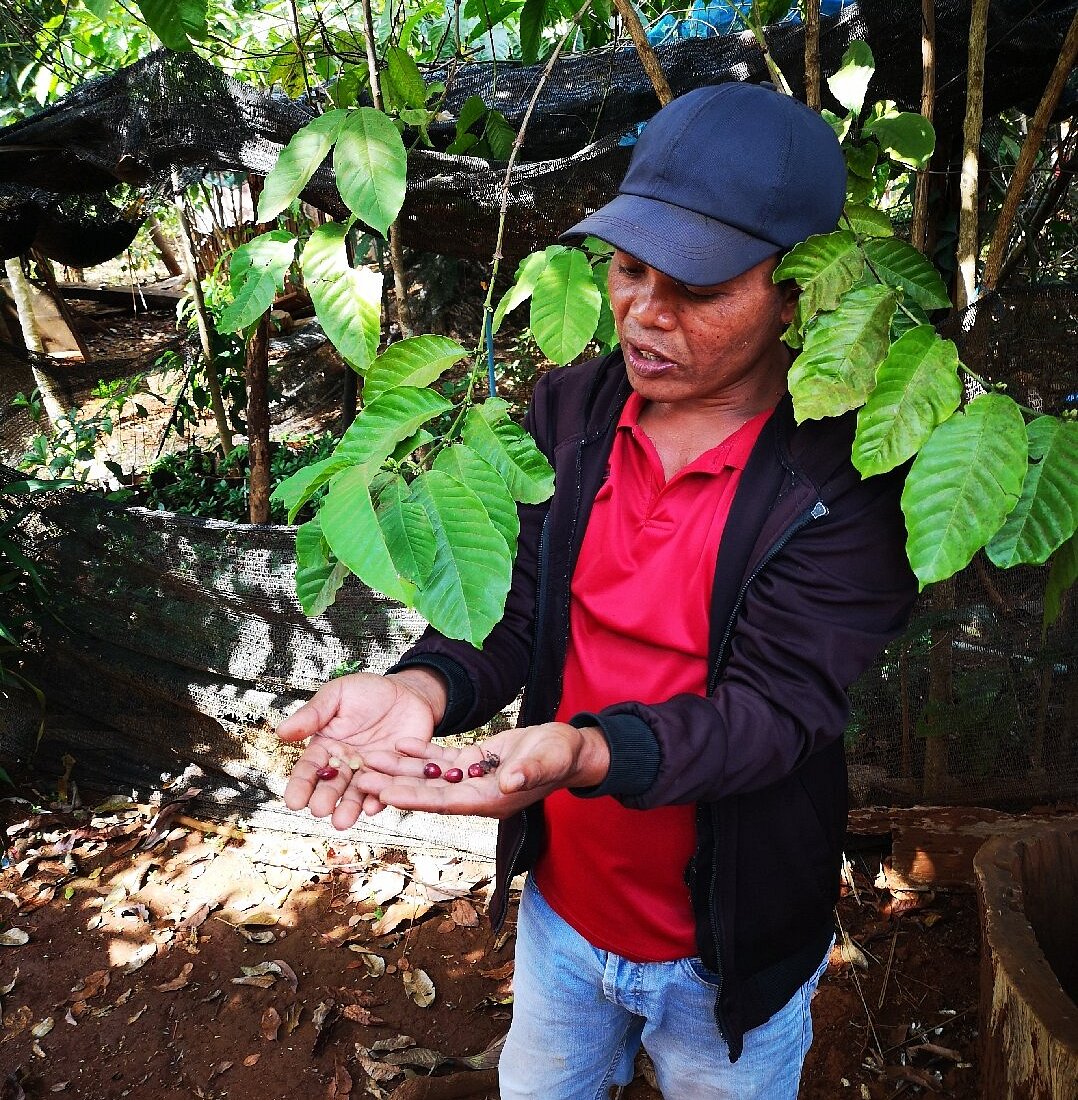
About thirty kilometres from Tad Lo, Mr Vieng turns a coffee stop into a compact lesson in the whole chain: walk among coffee trees, see how cherries are selected and processed, then finish with coffee prepared from beans grown on the farm.
- 01 Ride toward Laongam on the Bolaven route
- 02 Walk through the coffee trees
- 03 Follow cherries through processing
- 04 Finish with a farm-grown coffee
Allow around ninety minutes and do not build the stop around an old timetable or price. Current Visit Tad Lo information asks travellers to confirm visit times, price and booking method before setting out.
FIELD NOTES
THE QUICK READ
Coffee from Tree to Cup with Mr Vieng / Laos
TIME
ABOUT 90 MIN
less than three hours including arrival and coffee time
ROUTE
≈30 KM FROM TAD LO
near Laongam · motorbike recommended or car/minivan
BUDGET
PAID · CONFIRM PRICE
current Visit Tad Lo page does not publish a fixed rate
BEST FOR
COFFEE FROM FARM TO CUP
trees · processing · preparation · farmer context
THE FARM
Coffee makes more sense when you meet the fruit first
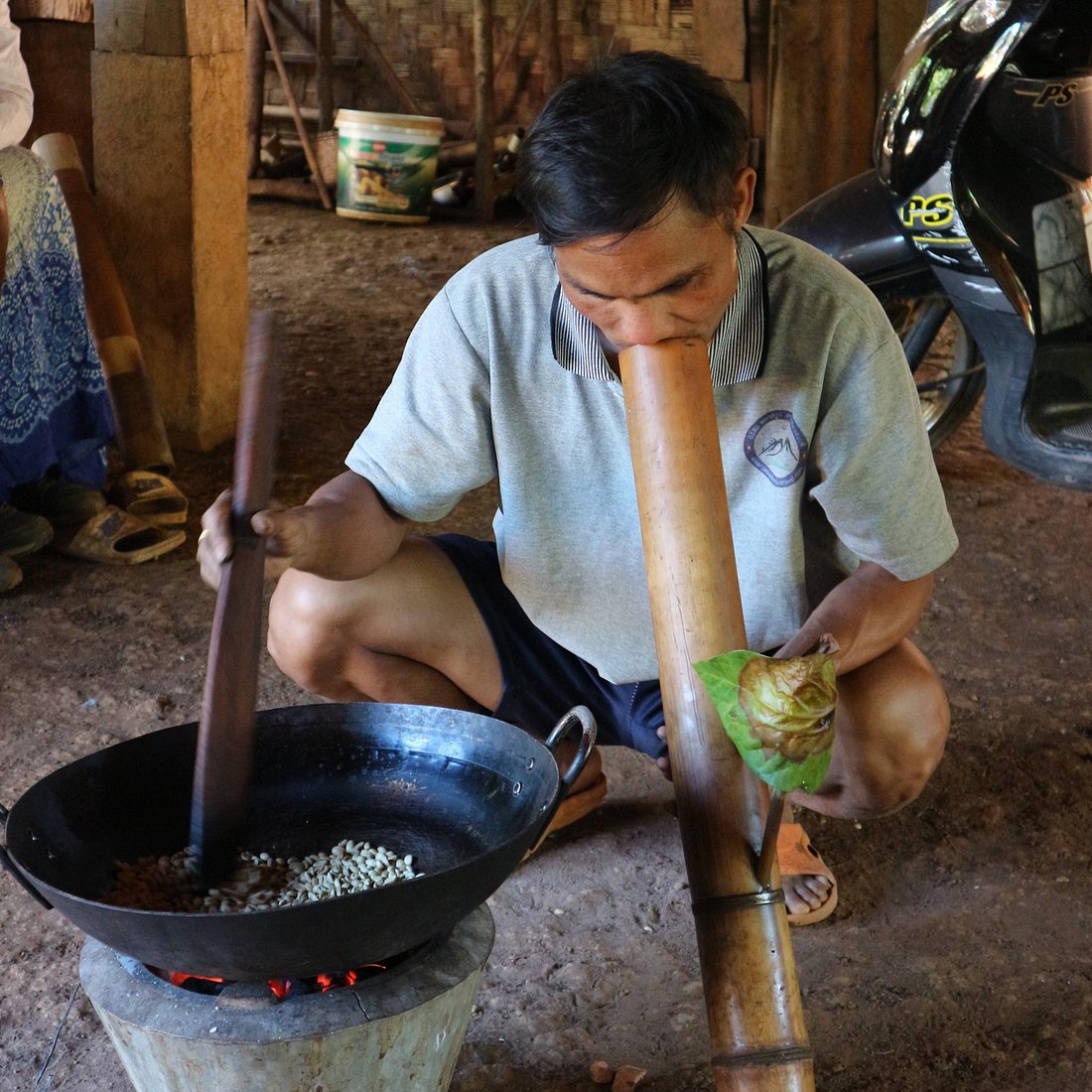
Visit Tad Lo currently describes Mr Vieng’s experience as a roughly ninety-minute journey from the coffee tree through processing and preparation. That sequence is the value of the stop. Start among the plants, look at the cherries and ask what ripeness means before thinking about roasting or brewing. Independent accounts from visitors over several years describe Mr Vieng explaining how ripe fruit is selected, how the beans are harvested and processed, and what changes before they are ready for the cup. The point is not a polished factory tour; it is seeing one farm connect agricultural work to a drink most travellers usually encounter only after all that work has disappeared from view.
THE CUP
The final coffee connects one farm to the wider Bolaven story
The Bolaven Plateau is the core of the Lao coffee industry. The Lao Coffee Association describes the southern provinces of Champasak, Sekong, Salavan and Attapeu as accounting for the overwhelming majority of national production, with the plateau able to grow both Arabica and high-altitude Robusta. Finishing the visit with coffee grown on or around the farm puts that regional story into one cup. Taste after you have walked the trees and followed the processing steps; the drink becomes more useful when you can connect flavour to fruit, drying, selection and preparation rather than treating the stop as only another café on the loop.
THE REGION
This farm belongs to the wider Bolaven coffee landscape
Mr Vieng’s stop sits near Laongam on the Salavan side of the Bolaven Plateau rather than in Tad Lo village itself. The Lao Coffee Association describes southern Laos — especially Champasak, Sekong, Salavan and Attapeu — as the centre of the country’s coffee production, with smallholder farms forming a major part of that landscape. Seeing one farm at close range makes the regional statistics useful: coffee here is not simply a café product or souvenir, but an agricultural crop tied to land, labour, season and processing choices.
THE QUESTIONS
Ask about the process you can actually see today
Older accounts of Mr Vieng’s farm mention different coffee varieties and stages of harvest or processing, but the useful visit is not a species checklist copied from someone else’s trip. What is visible changes with the season. Ask which plants are growing, whether cherries are ripe, what processing is happening now and how the beans in your cup were handled. A tree-to-cup visit is strongest when the farm in front of you sets the lesson rather than an old online itinerary.
FIELD NOTE · BEFORE YOU LEAVE
Confirm the visit before making the thirty-kilometre detour
Mr Vieng is far enough from Tad Lo that a failed walk-in would waste a useful part of the day. Confirm the current visit time, price, booking method and exact public name before leaving. Bring cash, water and sun or rain protection for the ride. The tour itself is easy and about ninety minutes, but the round trip turns it into a proper excursion from Tad Lo rather than a café stop you can improvise in the village.
QUESTIONS BEFORE GOING
Coffee from Tree to Cup with Mr Vieng,without the guesswork
Five things worth clearing up before you go.
What do you actually learn on Mr Vieng’s tree-to-cup coffee tour?
The point is to understand what happens before coffee reaches your cup. Visit Tad Lo describes a roughly ninety-minute farm visit following coffee from the tree through processing and preparation. Long-running firsthand accounts add useful detail: visitors are shown how to recognise ripe cherries, how coffee is harvested and processed before roasting, and then finish with coffee grown and prepared at the farm. The exact steps visible depend on the season.
What coffee varieties can you encounter at Mr Vieng’s farm?
Independent reports from the farm have repeatedly described Arabica, Robusta and Liberica, including tastings of more than one variety. Availability changes with the crop and what is being processed or served that day, so ask Mr Vieng which varieties are currently growing and which coffee you are actually tasting rather than expecting a fixed tasting flight.
When is the best time to visit Mr Vieng if you want to see the coffee harvest?
Official Laos tourism guidance says coffee harvesting across the Bolaven Plateau is generally visible from about October to February. Arabica and Robusta do not mature on exactly the same schedule, and one small farm will not show every production stage every day. Outside harvest season the visit can still explain the trees, processing and preparation, but confirm what is happening on the farm if seeing fresh cherries is important to you.
How long is Mr Vieng’s visit and how far is it from Tad Lo?
Visit Tad Lo currently describes the experience as approximately ninety minutes and places it about 30 kilometres by road from the Tad Lo Tourism Office near Laongam. A motorbike is recommended, with car or minivan access also possible. Budget extra time for the ride and for a coffee afterward rather than treating ninety minutes as the whole outing from Tad Lo.
Do you need to book Mr Vieng, and what are the current tour times and price?
Confirm before leaving Tad Lo. The current Visit Tad Lo page deliberately asks travellers to check visit times, contact and booking method instead of publishing a fixed schedule or tariff. For context, the November 2024 Bolaven Loop map listed one-hour tours at 80,000 kip at 11:30, 13:30 and 15:30, while a December 2024 visitor review reported 130,000 kip per adult. Because those figures already differ, use them only as historical reference and confirm the current arrangement directly.
PLAN YOUR VISIT
Coffee from Tree to Cup with Mr Vieng,at a glance
The practical details worth keeping close before you go.
From Tad Lo
About 30 km by road near Laongam
Visit Tad Lo currently places Mr Vieng’s coffee experience roughly 30 kilometres by road from Tad Lo Tourism Office. A motorbike is recommended; car or minivan access is also listed.
Time needed
About 90 minutes
The current local page describes approximately ninety minutes following coffee from the tree through processing and preparation. Keep a little extra time for the ride and an unhurried final cup.
Booking & times
Confirm before leaving Tad Lo
Visit Tad Lo asks travellers to confirm current visit times, contact, public name and booking method. Do not ride out assuming an old timetable is still operating.
Current price
Paid · confirm directly
The current Visit Tad Lo page does not publish a fixed price. Older traveller reports show much lower historical rates, so treat those only as history and confirm today’s amount directly.
Format
Tree → processing → preparation
Expect an easy farm-based coffee lesson rather than a strenuous hike. English is listed as useful, and the value is understanding the stages between coffee fruit and the cup.
Season
What you see varies with the coffee cycle
Tourism Laos notes that Bolaven coffee harvest generally runs around October to February. Treat that as regional context only and confirm what is actually happening at Mr Vieng’s farm on your date.
KEEP IT IN YOUR ATLAS
Save Coffee from Tree to Cup with Mr Vieng for the road.
Keep this field note close. Add it to My Atlas now, or open the map when you are ready to work out the route.

Keep exploring Tad Lo.






Field note method. Wikipedia is used as a research starting point for history and geography when a relevant article exists. Facts are checked against official, local or specialist sources where possible. Independent travel blogs and field reports are used to identify practical questions, recurring observations and traveller perspective; their wording is not copied.
Sources & photo licences
Research sources
Photo licences
- Visit Tad Lo partner media · Used with owner permission; attribution and link to Visit Tad Lo required ↗
- Basile Morin · CC BY-SA 4.0 ↗
- User-supplied photo · User-supplied
- Visit Tad Lo partner media · Used with owner permission; attribution and link to Visit Tad Lo required ↗
- Visit Tad Lo partner media · Used with owner permission; attribution and link to Visit Tad Lo required ↗
- Visit Tad Lo partner media · Used with owner permission; attribution and link to Visit Tad Lo required ↗
- Visit Tad Lo partner media · Used with owner permission; attribution and link to Visit Tad Lo required ↗
- Visit Tad Lo partner media · Used with owner permission; attribution and link to Visit Tad Lo required ↗
- Visit Tad Lo partner media · Used with owner permission; attribution and link to Visit Tad Lo required ↗
- Visit Tad Lo partner media · Used with owner permission; attribution and link to Visit Tad Lo required ↗
- Christophe95 · CC BY-SA 4.0 ↗
- Pierre André Leclercq · CC BY-SA 4.0 ↗
- Basile Morin · CC BY-SA 4.0 ↗
- Basile Morin · CC BY-SA 4.0 ↗