ISLAND SCRAPBOOK
Ride until something makes you stop
The bicycle day does not need a perfect circuit. Cross the old bridge, follow the island roads and stop whenever the Mekong looks better than the next pin.
No stopwatch today.



ATLAS ROUTE
One month from the Cambodian border to the Thai border, built around islands, road days, limestone, river time and places worth staying for.
If I had one month to cross Laos from south to north, this is the route I would build. I would start slowly on the Mekong, give the southern roads real time, use the cities as breathing spaces and keep the biggest block for Luang Prabang before leaving by boat.
Nothing here needs to be followed like a timetable. Save the places that speak to you, open the little field books when you want more detail, and leave enough room for one breakfast, one guesthouse or one conversation to change the plan.


Chapter 01
Cross the Cambodian border, get onto the island and stop trying to move north for a few days. Don Det is where I would let Laos begin slowly.
The Atlas begins here. Not with a checklist. With a river.
Give one day to the bicycle, one to the water, then keep the rest loose enough for a swim, a sunset or simply another lap of the island.

A few pages for the days when you want more than the short route.
ISLAND SCRAPBOOK
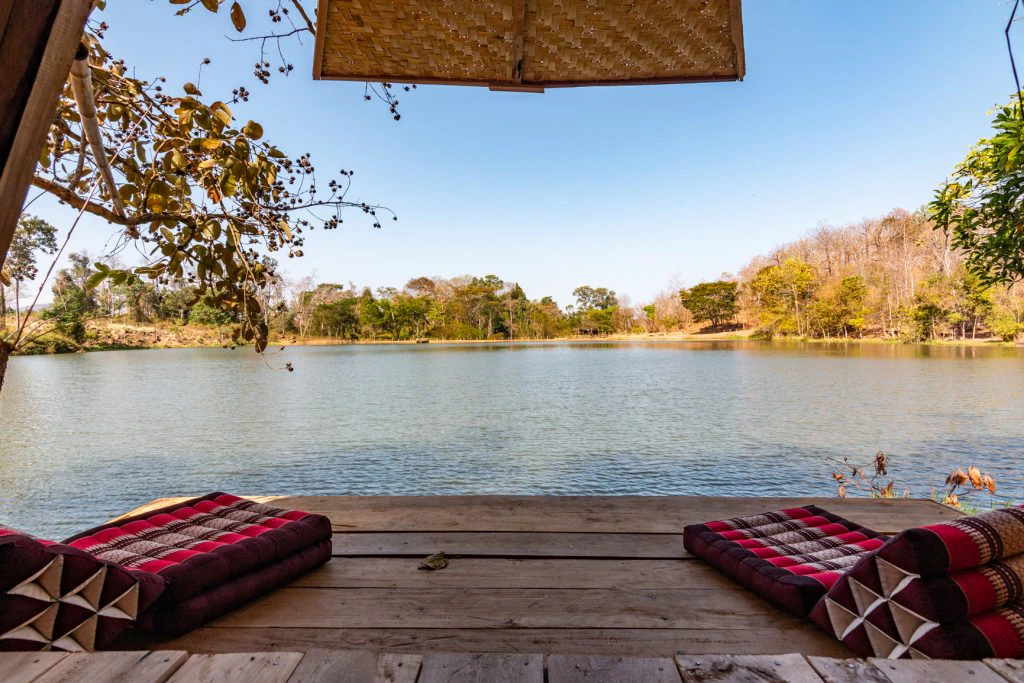
The bicycle day does not need a perfect circuit. Cross the old bridge, follow the island roads and stop whenever the Mekong looks better than the next pin.
No stopwatch today.
PICK ONE
The river can be active or lazy. Pick the version that fits the day.

Save it if a proper paddle belongs in your route.

Save it if a quiet swim stop sounds better.
MEMORY
A route page should be allowed to recommend nothing. Don Det is one of those places where an empty block can be the right decision.
One drink. One hammock. No next stop.
Chapter 02
Pakse is useful because several southern chapters meet here. I would keep the city light, give Vat Phou a real day and leave space for training before the Bolaven road begins.
Pakse works best when tomorrow already has a direction.
Return after the loop for one quiet night before the long movement north. Coming back is not wasted time when the base removes friction.

This chapter is small on purpose. Pakse gives the route direction rather than volume.
DAY DIRECTION
Give Vat Phou enough room that the drive and the landscape belong to the same day.
Open the full field note before you build the day.
PERSONAL MEMORY
The best personal recommendations are sometimes tiny. Mine in Pakse is breakfast.
Yes, I stayed another day for it.
Save it if breakfast matters as much as the next attraction.
POCKET LIST
Use Pakse to remove the boring problems before the plateau gets wider.
Then stop thinking about logistics.
Chapter 03
This is the section I would refuse to rush. The loop is not a race between waterfalls. The road, the forest, the guesthouses, the coffee and the people are the chapter.
Half of the Bolaven happens between the pins.
Build the four days around places where you actually stop. Fandee Island, Tad Lo, Samaki, Mr Hook and the treasure hunt can turn the loop from mileage into a journey.
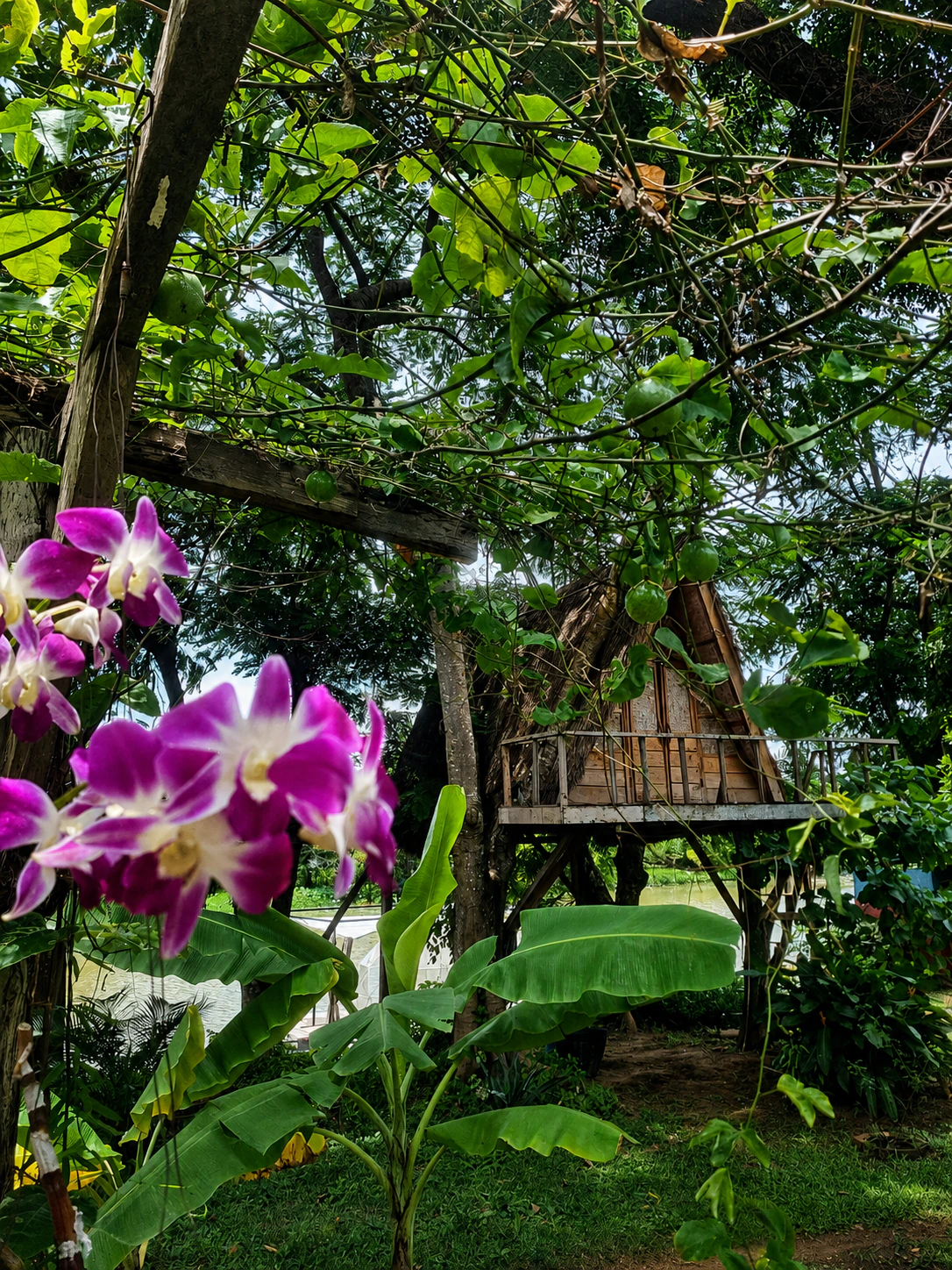
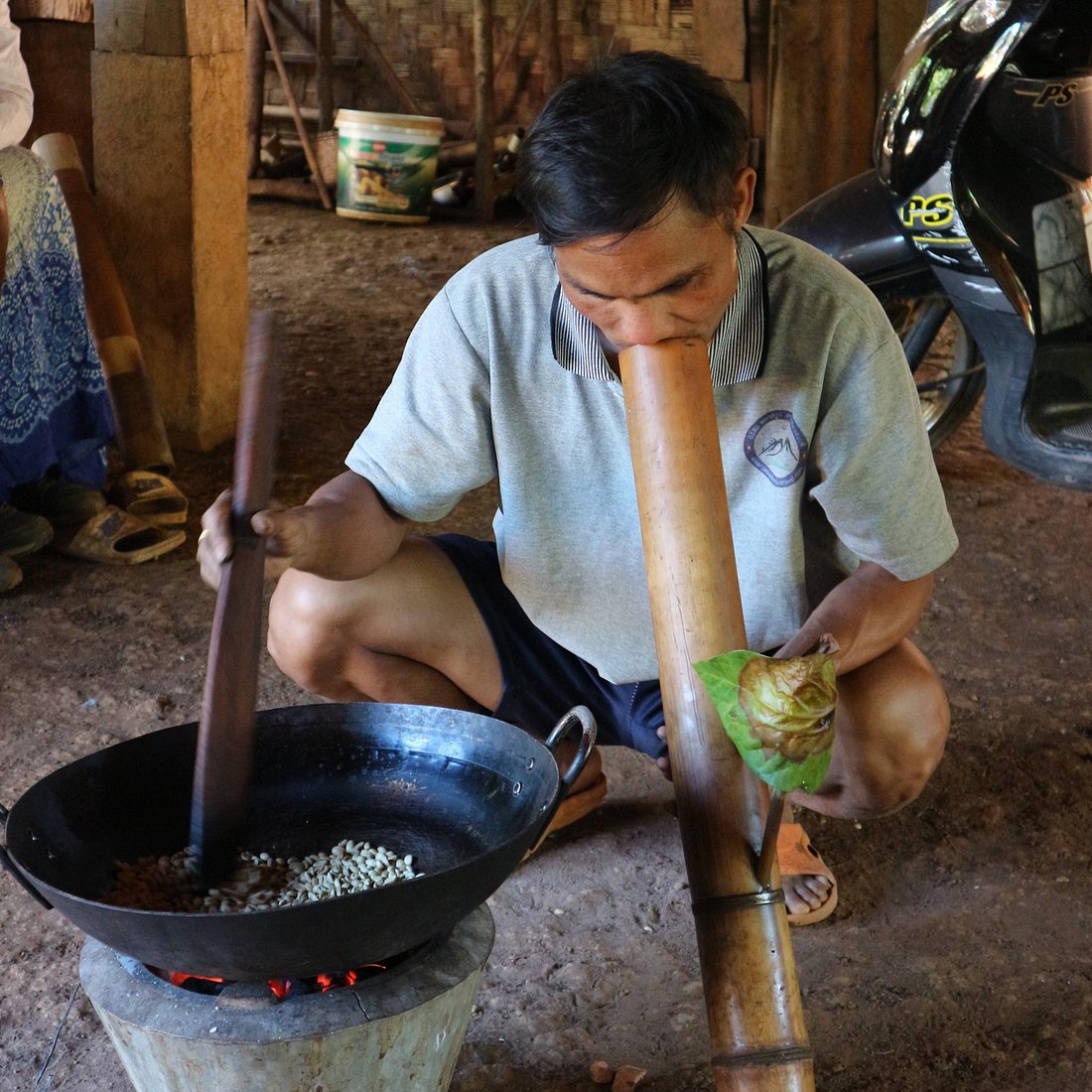
This is where the route becomes personal. Turn the pages only if you want the little stories.
TAD LO MEMORY
Stay long enough for the accommodation to become part of the trip rather than just the place where you sleep.
They are far too good at pétanque here.
Open the place note or save it straight to your Atlas.
SMALL STORY
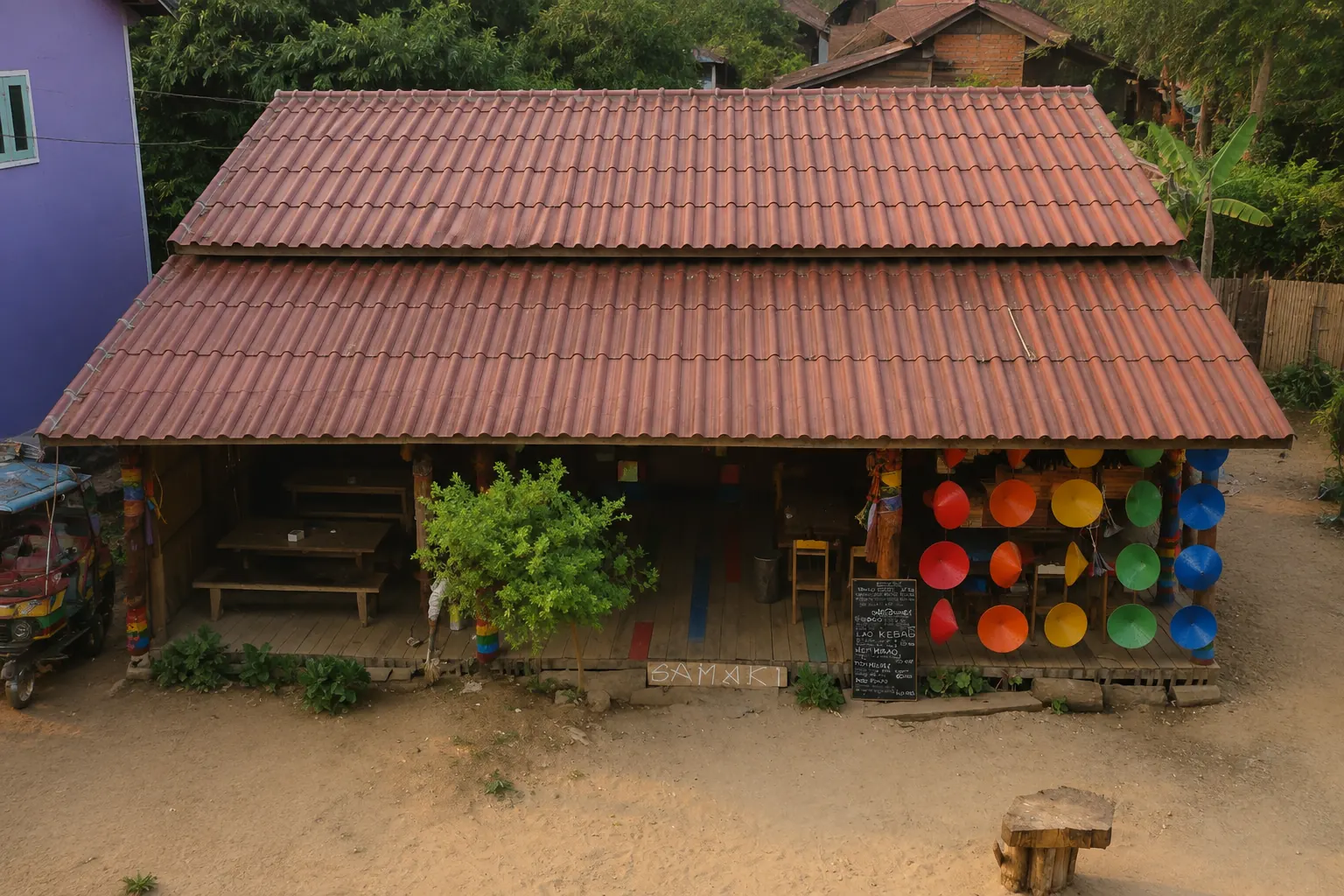
Samaki works in the story because the scooter is parked. Sit down, talk about the road and let other travellers alter your sense of time.
One juice. Then another story. Then it is evening.
Keep it if you want a social pause in Tad Lo.
COFFEE PAGE
Do not treat this like a quick coffee stop. Give the conversation and the place their own space.
Do not rush the coffee.
Save the experience if this belongs in your loop.
TREASURE PAGE
Let the treasure hunt pull you through the village and toward things you may otherwise ride past.
The best bit is between the clues.
Open the full activity if you want the clues in the Atlas.
Chapter 04
After the plateau, Thakhek changes the texture of the trip. Pick up a scooter and let Route 12 pull you into limestone, caves and swimming stops.
The scooter is not the activity. It is the key that opens the landscape.
I would keep the final evening easy. Return the bike, walk toward the Mekong and leave a little margin before the next long transfer.


Open this when the route starts feeling more like a road trip than a city stop.
BEFORE YOU RIDE
Ten careful minutes in town are better than a mechanical surprise in limestone country.
The first kilometres should confirm the bike.
ONE DIRECTION
Do not stack every cave into one day. Pick the one that makes the route feel right.
Open the full field note before you ride.
Keep this as the water stop if it fits the day.
PERSONAL CHOICE
The direct night bus is the cheaper line. Personally I went back to Pakse and flew to Vientiane because I wanted a proper night and a short flight. I am not twenty anymore.
Cheapest and best are not always the same answer.
Chapter 05
I would use Vientiane as a reset rather than another heavy activity chapter. Walk, eat, find a breakfast you like and enjoy two days with less pressure.
A quiet city can be useful in the middle of a busy route.

This is the smallest field book on purpose.
MORNING
Choose one place you actually want to sit in. A slow morning is enough of a plan.
Save it for the morning you do not want an alarm.
RESET
Walk, eat and watch the city settle toward the river. The route gets bigger again tomorrow.
Rest is part of the Atlas too.
Chapter 06
Vang Vieng is where the route becomes playful again. Three days are enough for sky, river and limestone if you stop trying to collect every lagoon and viewpoint.
One morning in the sky. One afternoon on the river. One day for the karst.

Sky, water and limestone. The pages can be opened in any order even if the route cannot.
SKY PAGE
If the balloon belongs in your trip, give it the cleanest morning rather than squeezing it before another activity.
This one is for the view, not the checklist.
Open the full field note and save it if this is your morning.
RIVER PAGE
Tubing changes the pace completely. Use it when the river conditions and your energy say yes.
Keep the river afternoon in your Atlas.
KARST PAGE
Pick one climb or cave direction and let it be enough.
More pins do not make a better day.

Open the field note if this is the climb you choose.
Chapter 07
This is where I would spend the largest block of the month. The old town, the Mekong, Kuang Si and the slower northern rhythm deserve to remain different experiences.
If you love something enough to go back tomorrow, go back tomorrow.
Give the town unbroken time before the day trips. Then give Kuang Si its own day and keep at least one extra day with no obligation to be new.

This book gets more room because this is the part of the route where repeating a place is allowed.
FIRST VISIT
Give the waterfall its own day. Walk through the levels, swim where it is allowed and do not schedule the afternoon so tightly that you have to leave before you want to.
Open the field note and save it before you build the day.
SECOND VISIT
I went back. That is the whole recommendation.
Some places do not need a new activity. They need another day.
OLD TOWN
Walk the same streets at different hours. Let temples, markets, cafes and the river become familiar instead of trying to make every walk unique.
Familiar is not boring.
CHOOSE ONE
If six days still have room, choose one more strong direction rather than filling every half day.
Keep the short climb if it fits your town day.

Save the river day only if you actually want it.
Epilogue
The route ends without a final attraction. For two days, the Mekong is the itinerary.
Let Laos disappear at river speed.
Bring patience, water and something to read. The reason to choose the slow boat is the long river landscape between the places, not the efficiency of arriving.

Two pages are enough for the last two river days.
RIVER DAY ONE
Settle into the boat and stop measuring the day by arrival time. The banks, villages and long bends of river are the point.
No rush. That is why you chose the boat.
RIVER DAY TWO
The second day turns the border into an ending rather than a sudden cut. Recheck the current pier and border details when you travel, then let the editorial idea stay simple.
One last long look at Laos.
Save the field note if you want this ending in your Atlas.